









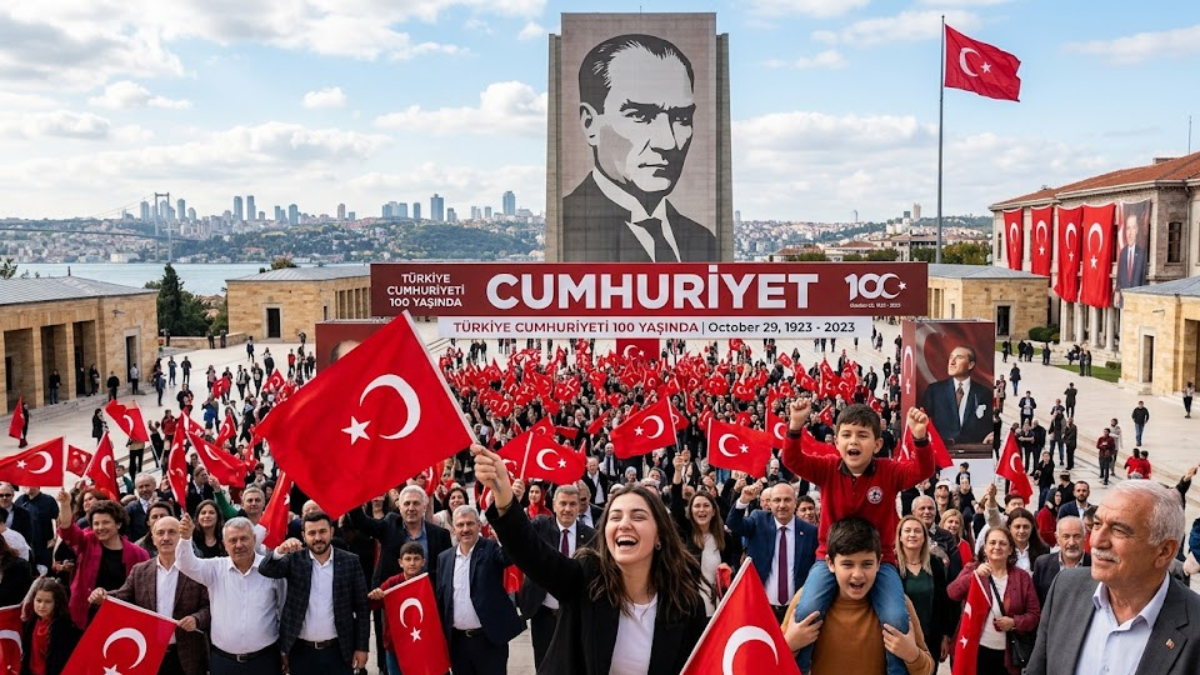
The word cumhuriyet carries a deep historical weight that completely transformed the landscape of the modern Middle East and Europe. Translated directly from Turkish, it means “republic.” However, it represents far more than just a political system of governance; it signifies a monumental shift from centuries of absolute monarchical rule under the Ottoman Empire to a modern, secular, and democratic nation-state.
also read:https://schedows.com/the-future-of-sustainable-it-infrastructure/
When the Grand National Assembly proclaimed the establishment of the Turkish Republic, it didn’t just alter the country’s legal structure—it completely revolutionized daily life, legal rights, language, and cultural identity. To truly understand this concept, we have to look closely at how it was built, why it has survived, and how it continues to shape the identity of millions of people today.
The Birth of the Republic: From Empire to Nation
For over six hundred years, the Ottoman Empire ruled across three continents, governed by a Sultan whose word was absolute law. However, by the early 20th century, structural weaknesses and the devastating impact of World War I left the empire fractured and occupied by foreign powers. Out of the ashes of this collapse arose a fierce national resistance movement led by a visionary military commander named Mustafa Kemal Atatürk.
The Historic Proclamation of 1923
Following a grueling War of Independence against occupying forces, the Turkish nationalist movement successfully reclaimed its sovereignty. On the historic night of October 28, 1923, Atatürk sat down with his closest associates and uttered the famous words: “Tomorrow, we shall proclaim the Republic.”
The very next day, October 29, 1923, the Grand National Assembly officially amended the constitution, changing the nation’s name to Türkiye Cumhuriyeti (The Republic of Turkey). Atatürk was immediately elected as its very first president. This pivotal moment fundamentally shifted the source of political sovereignty. The ultimate power to govern was stripped away from a royal family dynasty and placed directly into the hands of the public citizens.
Core Pillars of the Ideology
The structural foundation of the new government was built upon a specific set of principles known collectively as Kemalism or the “Six Arrows.” These principles were explicitly designed to pull the country out of its medieval past and push it rapidly into the modern era.
Secularism and Modernization
The most radical aspect of the transition was the absolute separation of state affairs from religious institutions. The new administration abolished the Caliphate, closed down religious courts, and replaced outdated religious laws with a modern civil code adapted from European legal systems.
This restructuring entirely altered social dynamics:
- Legal Equality: The new civil code established total legal equality between men and women.
- The New Alphabet: In 1928, the state replaced the complex Arabic-based Ottoman script with a brand-new Latin-based Turkish alphabet, causing literacy rates across the country to skyrocket.
- Modern Dress Codes: Western-style clothing was actively encouraged, and outdated feudal titles were completely banned to foster a more egalitarian society.
Evaluating the Structural Transformation
The transition from a vast, multi-ethnic empire to a focused, modern nation-state required an overhaul of every major public sector. The table below outlines how drastically the societal framework shifted following the official proclamation.
| Societal Sector | The Ottoman Empire Era (Pre-1923) | The Republic Era (Post-1923) |
| Source of Sovereignty | Absolute power held by the Sultan and royal dynasty. | Sovereign power belongs unconditionally to the citizens. |
| Legal Framework | Religious law mixed with imperial decrees. | Fully secular civil, criminal, and commercial codes. |
| Language & Script | Ottoman Turkish written in complex Arabic script. | Modern Turkish written in a simplified Latin alphabet. |
| Women’s Rights | Highly restricted public roles and legal limitations. | Full voting rights, right to hold office, and equal inheritance. |
| Primary Economic Focus | Agrarian model burdened by massive foreign debt. | State-backed industrialization and independent banking. |
The Long-Lasting Impact on Society
The establishment of democratic governance completely reimagined what it meant to be a citizen. Under imperial rule, individuals were classified primarily by their religious communities. The new constitutional framework united everyone under a shared, equal national identity.
Empowering Women and Transforming Education
Long before many Western nations granted equal political participation to women, the new government took progressive leaps forward. Turkish women achieved the right to vote in local elections in 1930, and by 1934, they obtained full franchise to vote and run for seats in the national parliament.
Concurrently, the educational system underwent a massive unification process. The government made primary education completely free and legally mandatory for every single child, regardless of gender or social class. Co-educational classrooms became the standard norm, ensuring that young girls and boys had equal access to the tools of social mobility.
Economic and Cultural Reconstruction
Building a self-sufficient economy was another monumental task. The state established national factories to produce essential goods like textiles, sugar, and steel, reducing dependency on foreign imports.
In the cultural sphere, the state heavily funded fine arts, western classical music, opera, and theater. Museums were opened across major cities to preserve both the ancient Anatolian heritages and the brand-new artistic expressions of a changing nation.
Modern Celebrations and Cultural Legacy
Decades later, the spirit of this transformation remains vibrant. Every single year on October 29, the entire nation halts to celebrate Cumhuriyet Bayramı (Republic Day). It stands as the most critical patriotic holiday in the country.
During this 35-hour official holiday, streets, skyscrapers, and homes are completely covered in massive red-and-white national flags and portraits of Atatürk. Millions of citizens march in synchronized processions, attend massive outdoor concerts, and watch dazzling fireworks displays over major landmarks like the Bosphorus Bridge in Istanbul.
Furthermore, the word has become an institutional brand name. It is the title of the nation’s oldest independent daily newspaper, founded in 1924 with Atatürk’s personal blessing to defend democratic values, and it lends its name to dozens of universities, avenues, and public squares across the country.
Frequently Asked Questions
1. What does the literal word mean?
The term originates from Arabic roots and translates directly to “republic” in English. It refers to a specific form of government where supreme power rests with the voting public and their elected representatives, rather than a monarch.
2. When is Republic Day celebrated?
It is celebrated every year on October 29. The official festivities legally begin at 1:00 PM on October 28 and last for a total of 35 hours.
3. Who was the primary architect behind this political change?
Mustafa Kemal Atatürk is the founding father and primary architect. He led the national resistance movement and served as the first president of the newly formed state.
4. How did this change affect women’s rights?
It fundamentally revolutionized women’s rights by abolishing polygamy, granting equal rights in divorce and child custody, and providing full voting and electability rights by 1934.
5. Why did the country change its alphabet?
The complex Arabic script used in Ottoman Turkish was highly difficult to learn, resulting in extremely low literacy rates. The adoption of the Latin alphabet in 1928 made reading and writing significantly easier for the general public.
6. What was the “Tenth Year Speech”?
It was a historic, inspiring speech delivered by Atatürk on October 29, 1933, marking the tenth anniversary of the nation. It summarized the immense struggles of the War of Independence and laid out future goals for scientific and industrial progress.
7. What is Anıtkabir and why is it important during celebrations?
Anıtkabir is the grand mausoleum of Mustafa Kemal Atatürk, located in the capital city of Ankara. Every Republic Day, hundreds of thousands of citizens, along with state officials, visit this site to pay their respects.
8. Is the newspaper of the same name still active?
Yes, the daily newspaper is the oldest up-market newspaper still printing in the country. Founded in May 1924, it continues to operate as an independent publication focused on secularism and democratic principles.
9. How did the transition affect the economy?
The state moved away from a heavily indebted agrarian model and adopted “statism,” meaning the government directly funded and built heavy industries, national railways, and domestic banking systems to ensure financial independence.
10. How do schools participate in the annual celebrations?
Schools across the nation spend weeks preparing for the holiday. Students practice patriotic poetry readings, perform traditional folk dances, and organize musical performances that showcase the history of the country’s transformation.
Conclusion
The establishment of the cumhuriyet was not just a simple change in leadership; it was a profound, total rebirth of a nation. By dismantling an absolute monarchy and building a secular, constitutional republic, the founders successfully created a modern society focused on equal citizen rights, universal education, and secular law. Today, the enduring legacy of 1923 continues to serve as the guiding light for the country’s democratic aspirations, cultural identity, and vision for the future.


