


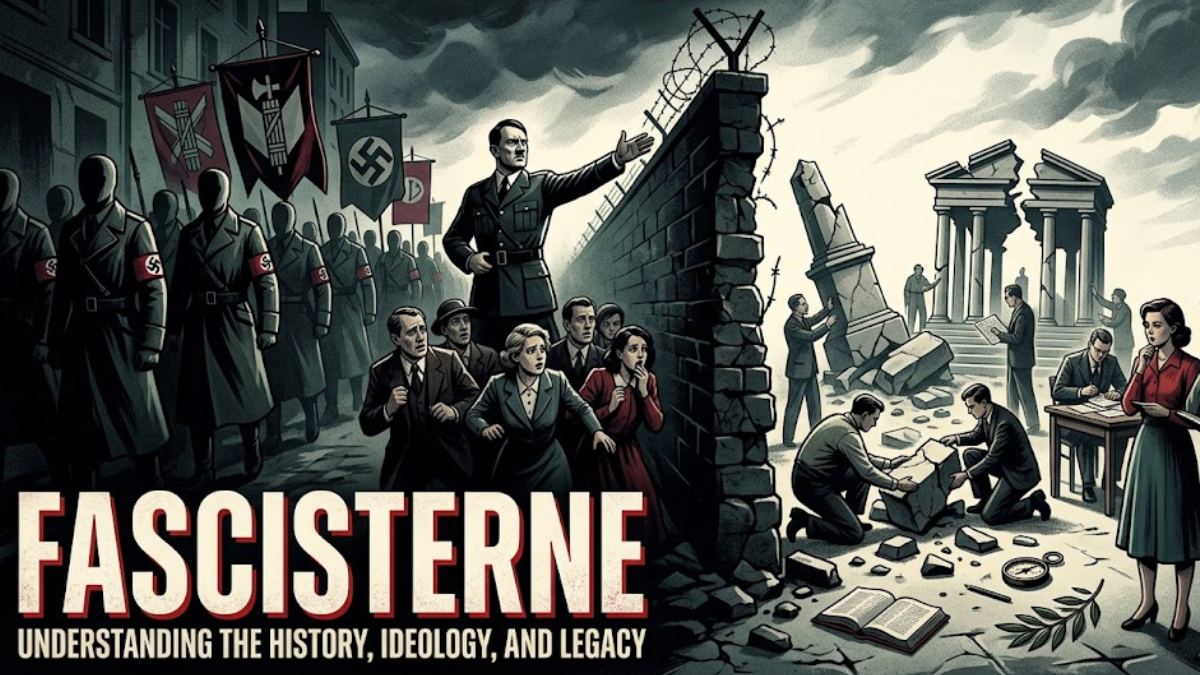
The study of twentieth-century European politics is incomplete without a deep dive into the authoritarian movements that reshaped national borders, sparked global conflicts, and fundamentally altered human history. Among these movements, the rise of extreme nationalist regimes stands as a stark reminder of how quickly democratic institutions can crumble when challenged by radical ideologies. In Nordic languages, particularly Danish, these historical actors and their followers are collectively referred to as fascisterne (the fascists).
also read:https://schedows.com/r6-marketplace/
Understanding the rise, operational methods, and ultimate downfall of these regimes requires an examination that goes far beyond simple definitions. It demands a closer look at the unique socio-economic conditions of the 1920s and 1930s, the psychological manipulation of public anxiety, and the structural machinery used by totalitarian states to maintain absolute control over everyday citizens. This comprehensive historical guide provides an objective, deeply detailed overview of this critical era, exploring how these factions gained power, structured their societies, and left behind a legacy that modern historians continue to analyze today.
The Root Ideology: Defining the Core Principles
To understand how fascisterne managed to capture the imaginations of millions of citizens during the interwar period, one must first break down the core philosophical and political tenets that defined their worldview. Unlike traditional conservative or democratic movements, this ideology rejected compromise, viewing society through a lens of absolute struggle, hierarchy, and national rebirth.
The fundamental pillar of the movement was ultra-nationalism blended with radical authoritarianism. The state was not viewed merely as a collection of individuals or an administrative body, but as a living, breathing organism that held supreme value over private life. Individual rights, personal liberties, and independent thought were completely subordinated to the collective will of the nation, which was channeled directly through a single, all-powerful leader.
Furthermore, the movement rejected both the capitalistic individualism of Western democracies and the class-struggle models of Soviet communism. Instead, it proposed a corporate state model where all sectors of society—labor, industry, agriculture, and the military—were forced to work in forced harmony under the strict guidance of the ruling party to achieve national self-sufficiency and imperial expansion.
The Path to Total Power: Sowing Seeds in Fractured Nations
The rapid rise of radical movements across Europe did not occur in a vacuum. It was the direct result of profound systemic crises that left general populations feeling economically desperate, politically alienated, and deeply fearful of the future.
+-----------------------------------------------------------------+
|                 THE CRISIS ENGINE OF POWER                      |
+--------------------------------+--------------------------------+
|      ECONOMIC DESPAIR          |      POLITICAL CHAOS           |
|  - Hyperinflation & poverty    |  - Fractured coalitions        |
|  - High unemployment levels     |  - Widespread social unrest    |
|  - Collapse of middle class    |  - Inability to pass laws      |
+--------------------------------+--------------------------------+
Exploiting Post-War Disillusionment
Following the devastation of the First World War, many European countries experienced immense political instability. The newly established democratic governments struggled to maintain public order and rebuild shattered infrastructure. When the Great Depression struck in 1929, causing mass unemployment and wiping out the savings of the middle class, the public’s faith in democratic systems shattered entirely.
The Mechanics of Public Manipulation
Charismatic leaders stepped into this political vacuum, positioning themselves as the ultimate saviors of their nations. They used advanced propaganda techniques, held massive, highly orchestrated public rallies, and relied on simplified, emotionally charged rhetoric to target scapegoats for the nation’s misfortunes. By promising immediate economic stability, a restoration of national pride, and a firm hand to crush civil unrest, fascisterne systematically dismantled democratic institutions from within, using legal loopholes to establish absolute dictatorships.
Comparing Totalitarian Movements of the Interwar Era
While the core philosophical traits remained consistent, different regional factions implemented their authoritarian visions in varied ways depending on local cultural, political, and social dynamics. The table below outlines how these movements structured their regimes across three distinct European nations during the peak of their influence.
| National Context | Primary Leadership Style | Defining Institutional Characteristics | Methods of Social Enforcement |
| Southern Europe (Italy) | Cult of personality centered on the concept of a singular, all-powerful state leader. | Total integration of corporate syndicates into the government; focus on Roman imperial revival. | Specialized secret police networks, forced censorship of independent press, state-run youth syndicates. |
| Central Europe (Germany) | Radical racial hierarchy built around extreme ethno-nationalism and pseudo-science. | Systematic dismantling of the constitution; complete party control over judicial and military systems. | Massive paramilitary organizations, state-controlled concentration systems, pervasive public surveillance. |
| Iberian Peninsula (Spain) | Traditionalist authoritarian military dictatorship backed by conservative institutions. | Heavy reliance on the military, land-owning elites, and traditional religious institutions to maintain order. | Violent suppression of regional autonomous movements, forced labor camps, strict cultural isolationism. |
The Machinery of Control: How Authoritarian Regimes Maintained Power
Once firmly established in the halls of government, fascisterne utilized a sophisticated, multi-layered apparatus to ensure that any potential domestic opposition was completely neutralized before it could organize. This total control over public and private life was achieved through four major pillars:
- The Monopoly on Public Information: Independent journalism was entirely abolished. Newspapers, radio broadcasts, theatrical plays, and literature were subjected to strict state censorship, transforming the media landscape into a singular tool for party propaganda.
- Pervasive State Surveillance: Secret police forces operated with absolute impunity, bypassing traditional courts to monitor ordinary citizens. Neighbors were encouraged to report on neighbors, and coworkers on coworkers, creating a profound culture of fear and mutual distrust.
- The Indoctrination of Youth: Education systems were thoroughly rewritten to align with party ideology. Young children were funneled into mandatory state-run youth organizations designed to instill blind obedience, physical discipline, and militaristic values from an early age.
- The Cult of Leadership: The head of state was elevated to a semi-divine status through public imagery. He was consistently portrayed in media as infallible, tireless, and uniquely chosen by history to lead the nation to greatness.
Frequently Asked Questions
1. What is the precise linguistic difference between “fascismen” and “fascisterne” in Nordic languages?
“Fascismen” refers directly to the abstract political ideology, philosophy, or system of fascism itself. On the other hand, fascisterne is a plural noun that specifically denotes the actual human actors, party members, and followers who actively practice, support, or enforce that ideology.
2. Did these interwar regimes allow any form of private corporate ownership?
Yes, unlike state-controlled Soviet communism, these regimes maintained private property and corporate structures. However, this ownership was conditional; private business owners and industrial leaders were forced to align their production goals completely with the state’s military and economic agendas.
3. How did the League of Nations respond to the aggressive expansionism of these factions?
The League of Nations proved largely ineffective. Hampered by a lack of its own military enforcement mechanism and a widespread desire among Western democracies to avoid another major continental war, the League issued verbal condemnations and minor economic sanctions that failed to halt regional invasions.
4. What was the specific role of women within these highly authoritarian states?
The regimes promoted deeply traditionalist and patriarchal social structures. Women were heavily discouraged from pursuing professional careers or higher education; instead, state policies, financial incentives, and public propaganda focused exclusively on maximizing birth rates to grow the national population.
5. Did any democratic nations in Scandinavia face significant internal threats from these movements?
While local variants of these nationalist parties formed in Denmark, Sweden, and Norway during the 1930s, they failed to win significant parliamentary representation. The deep-rooted stability of Scandinavian democratic institutions, combined with timely agricultural and economic reforms, prevented these radical factions from gaining mainstream traction.
6. How did these regimes utilize modern technology to expand their influence?
They were pioneers in leveraging new media. The rapid proliferation of affordable home radio sets and the widespread popularity of cinema newsreels allowed the state to broadcast political speeches and propaganda directly into the private living spaces of millions of citizens simultaneously.
7. What happened to the legal systems under these totalitarian governments?
Traditional judicial independence was entirely destroyed. Judges were required to swear personal oaths of loyalty to the regime, laws were rewritten to protect party interests, and specialized political courts were created to try cases of treason without standard due process.
8. How did the corporate state model differ from free-market capitalism?
In a free market, prices, wages, and production levels are dictated by supply and demand. In the corporate state model, the government established joint committees of employers and workers managed by party officials to dictate wages, control prices, and determine production quotas by decree.
9. What was the historical significance of the Spanish Civil War regarding these movements?
The Spanish Civil War (1936–1939) served as a major ideological and military testing ground. Major authoritarian regimes in Europe sent significant weapons, aircraft, and troops to support General Francisco Franco’s nationalist forces, refining military tactics that would later be deployed on a global scale.
10. How do modern historians approach the teaching and preservation of this dark historical era?
Modern historians emphasize deep archival research, the preservation of physical concentration and labor camp sites, and the collection of oral histories from survivors. The objective is to analyze the structural warning signs of democratic backsliding, ensuring future generations understand the mechanisms that allow extreme authoritarianism to take root.
Conclusion: A Short Summary of the Totalitarian Era
The rise and fall of fascisterne remains one of the most thoroughly studied and cautionary chapters in modern political history. Emerging from the profound economic ruins and psychological trauma of the First World War, these radical factions successfully weaponized public fear, ultra-nationalism, and systemic instability to dismantle democratic governance across multiple European nations. Through a calculated combination of brutal state terror, pervasive media censorship, total youth indoctrination, and highly structured corporate economic models, they established total control over both public infrastructure and private life.
Ultimately, the aggressive, expansionist nature of these regimes led directly to the catastrophic devastation of World War II, culminating in their total military defeat and institutional collapse. By examining the socio-political vulnerabilities that these factions exploited, modern society gains indispensable insights into the vital importance of protecting democratic norms, judicial independence, and open, pluralistic public discourse from the dangers of radical polarization.

