


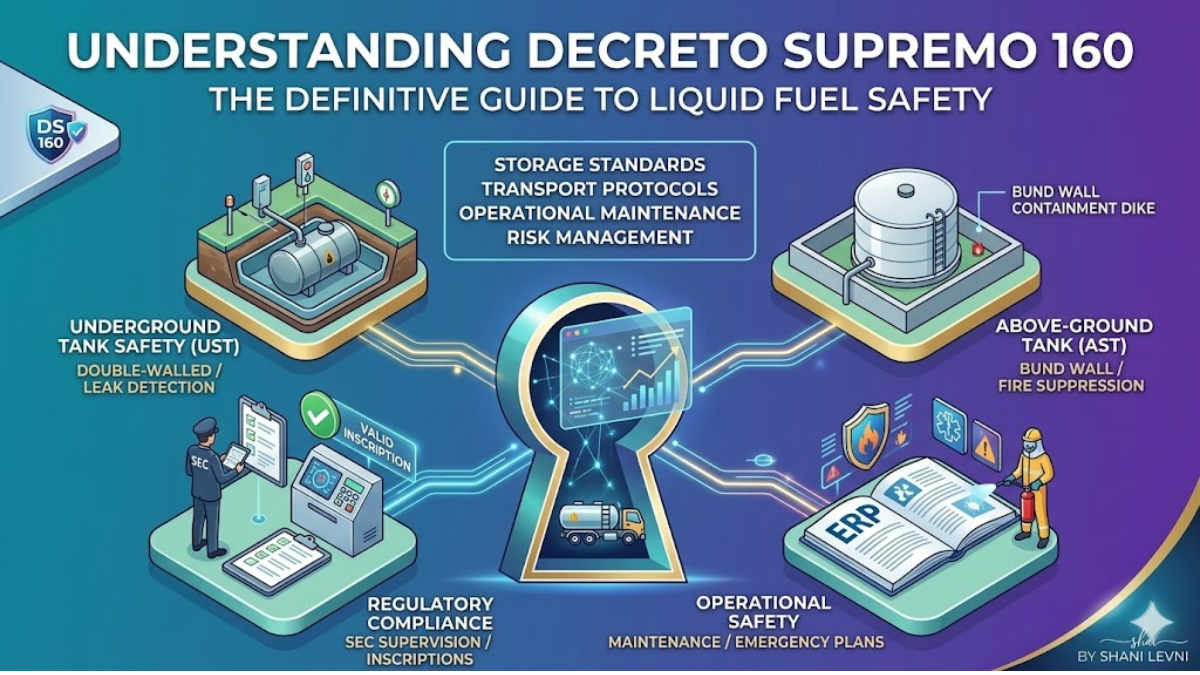
Learn everything about Decreto Supremo 160. This detailed guide covers safety standards for storage, transport, and distribution of liquid fuels under SEC regulations.
also read: https://schedows.com/axelanote/
Introduction
In the complex world of industrial safety and energy management, regulations serve as the backbone of public protection and environmental preservation. One of the most critical legal frameworks in this sector is the decreto supremo 160. This regulation, emanating from the Ministry of Economy, Promotion, and Tourism in Chile, establishes the “Safety Regulation for Production, Refining, Transport, Storage, Distribution, and Supply Facilities and Operations of Liquid Fuels.” Whether you are a business owner, a safety engineer, or a regulatory consultant, understanding the intricacies of this decree is essential for maintaining compliance and ensuring operational integrity.
What is Decreto Supremo 160?
The decreto supremo 160 represents a comprehensive modernization of safety standards for the liquid fuel industry. It replaced older, fragmented regulations to create a unified code that covers the entire lifecycle of fuel handling—from the moment it is refined to its final delivery at a service station or industrial facility. The primary objective of this regulation is to prevent accidents, minimize the risk of fire or explosion, and protect the health of workers and the general public.
Compliance with the decreto supremo 160 is not merely a legal suggestion; it is a mandatory requirement overseen by the Superintendency of Electricity and Fuels (SEC). The decree applies to all liquid fuels, including gasoline, diesel, kerosene, and aviation fuels. By setting rigorous standards for design, construction, and operation, the regulation ensures that the infrastructure supporting these volatile substances remains robust against both human error and natural disasters.
Scope and Field of Application
The reach of decreto supremo 160 is vast, touching almost every part of the energy supply chain. It is designed to be inclusive, ensuring that no stage of fuel handling is left without safety oversight. The regulation applies to several specific types of facilities and operations:
- Production and Refining Plants: Large-scale facilities where crude oil is transformed into usable fuels.
- Storage Terminals: Massive tank farms that hold fuel before it is distributed regionally.
- Transport Operations: This includes tanker trucks, rail cars, and pipelines that move fuel across the country.
- Service Stations: Public-facing gas stations where consumers refuel their vehicles.
- Private Supply Facilities: Industrial or agricultural tanks used for internal fleets or machinery.
By standardizing the requirements across these different areas, the decreto supremo 160 creates a level playing field where safety is prioritized regardless of the size of the operation.
Key Technical Requirements for Storage Tanks
One of the most detailed sections of the decreto supremo 160 concerns the storage of fuels. Given the high volatility of substances like gasoline, the construction and placement of storage tanks are subject to strict engineering controls. The regulation differentiates between underground tanks (UST) and above-ground tanks (AST), each with its own set of safety protocols.
For underground tanks, the decreto supremo 160 mandates the use of double-walled structures or secondary containment systems. This is a critical measure to prevent soil and groundwater contamination in the event of a primary wall failure. Furthermore, these tanks must be equipped with advanced leak detection systems that provide real-time monitoring. The placement of these tanks must also respect specific safety distances from property lines, occupied buildings, and electrical installations to prevent “chain reaction” disasters in case of an incident.
Above-ground tanks, on the other hand, focus heavily on fire suppression and containment dikes. According to the decreto supremo 160, ASTs must be surrounded by a reinforced concrete or earthen bund capable of holding the entire volume of the largest tank plus a safety margin. This ensures that if a rupture occurs, the fuel is contained within a localized area rather than spreading uncontrollably across a site or into nearby water sources.
Safety Standards for Transport and Distribution
The movement of liquid fuels is inherently risky due to the dynamic nature of road and rail transport. The decreto supremo 160 addresses these risks by setting high standards for the vehicles and equipment used in distribution. Tanker trucks must undergo rigorous periodic inspections to verify the integrity of their compartments, valves, and vapor recovery systems.
The regulation also emphasizes the “human factor” in transport. Drivers and operators involved in the transport of liquid fuels must receive specialized training that covers defensive driving, hazardous material handling, and emergency response. Furthermore, the decreto supremo 160 requires that all transport units carry specific safety equipment, including fire extinguishers of appropriate classes, spill kits, and personal protective equipment (PPE).
Comparison of Facility Types and Compliance
To better understand how the regulation applies, we can look at the following comparison table which outlines the different requirements for various facility categories.
| Facility Type | Primary Regulatory Focus | Key Security Element | Inspection Frequency |
|---|---|---|---|
| Service Stations | Public Safety / Leak Prevention | Double-walled tanks / Leak Sensors | Annual / Continuous |
| Industrial Storage | Fire Containment / Zoning | Retention Dikes / Distances | Bi-annual |
| Transport Trucks | Mechanical Integrity / Road Safety | Emergency Shut-off Valves | Every 6 months |
| Refining Plants | Process Safety / Risk Management | Fire Suppression Systems | Continuous Audit |
Operation and Maintenance Requirements
A facility that is built correctly is only safe if it is operated and maintained correctly. The decreto supremo 160 places a significant burden of responsibility on the “Owner” or “Operator” to maintain a rigorous maintenance schedule. This includes the periodic calibration of measuring instruments, the testing of emergency stop buttons, and the inspection of piping systems for signs of corrosion or fatigue.
Maintenance records are a vital part of compliance. Under the decreto supremo 160, facilities must keep detailed logs of all inspections, repairs, and tests performed. These logs must be available for review by SEC inspectors at any time. Failure to maintain these records can lead to significant fines or even the temporary closure of the facility. The logic here is simple: if it isn’t documented, it didn’t happen.
Emergency Plans and Risk Management
No matter how safe a facility is, the possibility of an accident always exists. The decreto supremo 160 requires every fuel facility to have a written Emergency Response Plan (ERP). This plan must be site-specific and must outline the exact steps to be taken in the event of a fire, spill, or medical emergency.
The ERP must be more than just a document on a shelf. The decreto supremo 160 mandates that employees participate in regular drills and simulations. These exercises ensure that when a real emergency occurs, the staff can react instinctively and effectively. Additionally, the plan must include contact information for local fire departments, environmental agencies, and the SEC, ensuring a coordinated response to any major incident.
The Role of the SEC in Supervision
The Superintendency of Electricity and Fuels (SEC) acts as the enforcement arm for the decreto supremo 160. Their role is to verify that the standards set in the decree are being met in the field. This is achieved through a combination of planned inspections, unannounced audits, and the review of documentation submitted by facility owners.
The SEC has the authority to issue “Inscriptions,” which are essentially permits that allow a facility to operate. Without a valid SEC inscription, a fuel facility is considered illegal and can be shut down immediately. The decreto supremo 160 provides the SEC with the legal backing to impose sanctions on those who violate safety protocols, ranging from minor administrative fines to the permanent revocation of operating licenses for repeat offenders or those who cause significant environmental damage.
Frequently Asked Question
1. Does Decreto Supremo 160 apply to domestic heating oil tanks? Generally, the decree applies to commercial and industrial facilities. However, if a domestic tank exceeds a certain capacity (usually 1,100 liters in specific jurisdictions), it may fall under the safety standards of the decreto supremo 160 regarding installation and registration.
2. What is an ‘Inscripción de Instalación de Combustible’? This is the official registration process with the SEC that confirms a facility has been designed and built according to the standards of the decreto supremo 160. It is a mandatory step before any fuel can be received.
3. How often must underground tanks be tested for leaks? The regulation requires continuous monitoring through electronic systems. If manual methods are used, frequency increases, but modern installations under the decreto supremo 160 almost always utilize automatic tank gauging (ATG) for 24/7 detection.
4. Are there specific colors required for fuel piping? Yes, the decreto supremo 160 refers to technical standards that mandate specific colors for different fuel types (e.g., yellow for diesel, blue for kerosene) to prevent cross-contamination and errors during unloading.
5. Can I install a fuel tank near a school or hospital? The decreto supremo 160 establishes strict safety distances. Installing a facility near “sensitive” areas like schools or hospitals requires significantly larger buffer zones and additional safety measures compared to industrial zones.
6. What happens if I discover a leak in my facility? According to the decreto supremo 160, you must immediately activate your Emergency Plan, stop the source of the leak, and report the incident to the SEC within a specified timeframe (usually 24 hours for significant events).
7. Does the decree cover the quality of the fuel itself? The decreto supremo 160 focuses primarily on safety and infrastructure. Fuel quality (octane levels, impurities) is typically covered under different technical specifications and decrees, though they are often managed by the same authority (SEC).
8. Is a ‘Security Manager’ required for all facilities? For larger installations like terminals and refining plants, the decreto supremo 160 requires a designated person responsible for safety. For smaller service stations, the owner or administrator usually carries this legal responsibility.
9. Are portable fuel containers covered by this decree? The decree focuses on fixed installations and large-scale transport. However, it does provide guidelines on how fuel should be dispensed into portable containers at service stations to ensure public safety.
10. What is the fine for non-compliance with DS 160? Fines vary depending on the severity of the infraction and the potential risk to the public. They can range from a few UTM (Monthly Tax Units) to thousands, along with the potential for facility closure.
Conclusion
The decreto supremo 160 is a pillar of industrial safety that ensures the liquid fuel industry operates without compromising public well-being or the environment. By meticulously covering every aspect of fuel handling—from the thickness of tank walls to the training of truck drivers—the regulation provides a clear roadmap for excellence. While the technical requirements may seem daunting, they are a necessary investment in the longevity and reliability of the energy sector. Staying compliant with the decreto supremo 160 is not just about avoiding fines; it is about fostering a culture of safety that protects lives and secures the future of energy distribution.

